
The Future of NIL is Community
Dari Arrington on storytelling, sport, and the next wave of athlete expression.

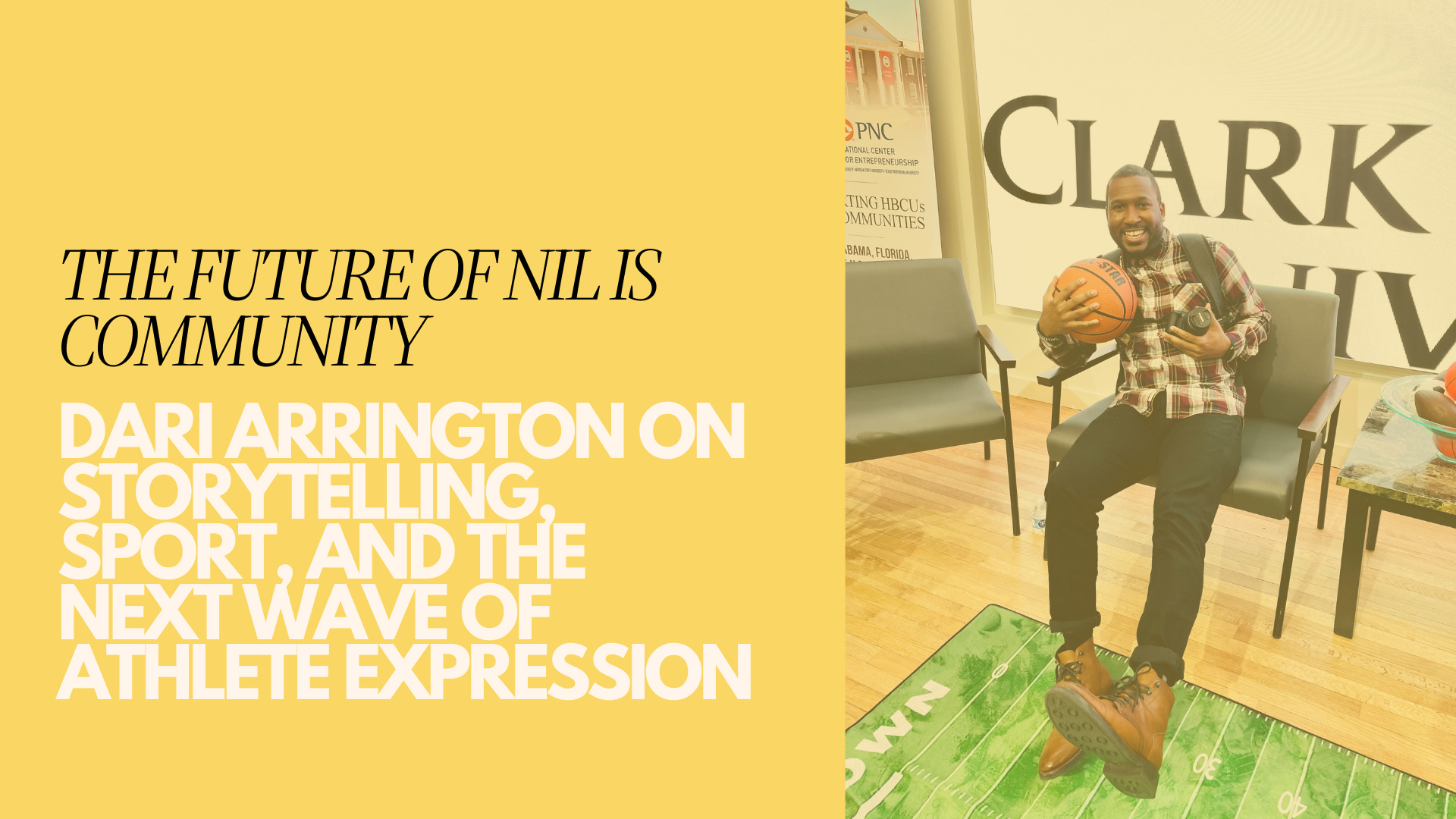
I had the pleasure of sitting down with 🏀 Dari Arrington founder of Life & Basketball Brand to discuss his transition from the pros to his role as a founder and community activist, and his insights into the future of NIL.
You sit at the intersection of sport, community, and storytelling. How do you define yourself?
I’m all of the above—and then some. You can’t define me with a single word. Who I am shifts depending on the moment and the person I’m with. At the core, Man of God, I’m a lover of basketball, community, and empowerment.
Tell us about Life and Basketball. Where did it begin, and how has it grown?
It started with me—as an underdog trying to find a voice and a platform in the basketball world. I used creative content—visuals, photography, videos—to share my story and connect with others like me. But quickly, it became bigger than me.
Today, Life & Basketball Brand is a storytelling and community platform that supports players, creators, and aspiring professionals in sports. We offer services from player management to brand development, and we help emerging sport brands connect with their communities through media, events, and mentorship.
You’re working both online and offline. How do these two worlds connect for you?
In the digital world, we focus on helping people shape their online presence and grow their communities. That includes brand building, management, and content strategy.
But our in-person work? That’s our bread and butter. We host basketball games and events that bring people from all walks of life together. In those spaces, you see life reflected in real time—people collaborating, slacking off, stepping up, figuring it out together. Just like in the game, just like in life. These moments create room for real partnerships.
What do you wish more brands understood about working with community organizers? The impact is real, even if it starts small. It’s like adopting a puppy—you might not see the ROI right away, but given time, attention, and care, it grows into something powerful. Brands should be investing in community builders. That’s where future culture starts.
Your logo—a silhouette—has a powerful backstory. Can you share it?
It’s a silhouette of me, inspired by the Air Jordan Jumpman logo. Growing up in Chicago, Michael Jordan was everything—greatness, flight, legacy. But here’s the twist: not everyone can dunk. Most of us can lay it up. I wanted to create a symbol that was aspirational, but also relatable.
The lay-up represents accessibility. It’s for the everyday hoopers, the overlooked talent, the ones who were told they couldn’t. It's also a nod to the WNBA logo—representing a broader spectrum of who gets to be seen and celebrated.
Walk us through your journey—from being cut to going pro to becoming a founder.
I was cut all four years of high school. I bounced around smaller colleges and eventually found my lane in streetball and creative play. That led to a pro contract in Sydney, Australia. When I couldn’t re-sign, I hit a low point. Basketball depression is real—I didn’t know what was next.
Therapy wasn’t something we talked about. I wasn’t ready to lean on faith. But watching Nike commercials—seeing athletes rise, overcome—reignited my fire. I got back on the court and realized I had something to give back.
I launched a free player development program in Seattle. I had no curriculum, just heart. Fifty, sixty kids joined. Parents saw results. Eventually, I was able to turn it into a paid program. That evolved into my deep dive in grassroots work. When I moved to Atlanta, I dove into content creation, blending storytelling with hoops.
Is that when “The Bucket Collector” was born?
Exactly. It was my alter ego—a way to blend creativity, sport, and influence. I started seeing the power of content. If you're actually doing something real, the impact goes beyond likes. It moves people.
That momentum led to what I call my “30-Day Stakeout” with the Warriors. Inspired by The Joe Anderson story and the Colin Kaepernick campaign, I asked myself: How crazy can my dream be?
I created a campaign titled “Be The Why” and I made a sign: “More Than a Kid From Chicago: Not Homeless. Just Need A Chance At My Dream.”
I showed up every day. I caught Steph Curry’s attention. We talked. He told me to keep going. Bob Myers remembered me, too. Those small moments fueled big belief—not just in myself, but in what’s possible.
What kind of impact have you seen from Life and Basketball?
The DMs are wild. People telling me they feel seen, that what we’re doing saved their life. When someone takes the time to reach out—that lets me know we’re on the right track. This isn’t just a business. It’s a movement. It’s healing and empowerment through sport.
Let’s talk NIL. What’s shifted in the last 7 years?
We’ve entered a new era. What used to be limited to pros—endorsements, control of your narrative—is now open to college athletes and beyond. Athletes no longer have to go through agents to tell their story. The power is in their hands. Creativity has exploded.
At its best, NIL is about generational wealth, empowerment, and ownership. At its worst? Exploitation, misinformation, and mental health crises—especially when athletes sign deals without understanding what’s at stake or lack control of the narrative or deal.
What should we avoid as this space grows?
Avoid partnerships that lock you into a version of yourself that no longer fits. NIL should be about more than a highlight reel—it should support the full arc of who you are and who you're becoming. That includes the messy, human parts: injuries, mental health breaks, motherhood, transfers, and even stepping away from sport. If a brand only shows up for the wins and the visibility, but not the growth and the pivots, it’s not the right partner.
Where is NIL heading next?
NIL is moving from short-term deals to long-term storytelling. Athletes are becoming founders, creatives, and brand builders in their own right. We're seeing a shift from transactional sponsorships to deeper collaborations—co-creating products, launching media ventures, building community impact initiatives. The next wave of NIL isn't just about being the face of a brand—it's about shaping the brand from the inside. The athletes who win in this next phase will be the ones who know their worth, own their story, and think beyond the game.
What’s your POV on NIL and brand deals right now?
Right now, NIL is too focused on cash, not enough on connection. We need to teach relationship-building—how to network, how to stay grounded. That’s where opportunity actually grows. I’m working on school programs to help make that happen.
When all is said and done, how do you know you succeeded?
When people talk about me the way I talk about Nike.
I’ll know I’ve succeeded when what I put out into the world hits—not just in reach or recognition, but in impact. I still chase that feeling of “this could go even harder.” Like an artist, I’m always fine-tuning. The work never really feels done, but every now and then, someone else sees it and says, this is it. And that matters.
Success, to me, isn’t about being done—it’s about being in that rare space where I’m not searching for the next thing because I know: this was always it. If it moves people the right way, if it says something that lasts, if it shifts the conversation—I feel like I did what I came to do.
Final thought—what’s at the core of everything you do?
I’m an advocate for underdogs. Not just athletes—anyone who’s been overlooked. Corporate folks. Creators. Kids with big dreams. I’m here to be the voice that says, “You can do it. Dream Different. Put in the work.”
Gratitude for 🏀 Dari Arrington - founder, storyteller, marketer, community organizer, and NIL expert!!!
Mo Fitzgerald is a strategist elevating sport x art x culture through leadership, brand and storytelling.
Find us to chat more on all things sport, community, and storytelling.